How to Develop Curiosity in Children Ages 3–7

You don't need to teach young children to be curious, they're already curious. What parents can do is create more opportunities for that curiosity to grow. And one of the simplest places to start is with something that happens in almost every home, every day: the endless stream of “Why?” questions.
When a child asks, “Why does the moon follow us?” or “Where do ants sleep?”, our instinct is to answer. And today, with Google and AI, we can find almost any answer in seconds. But sometimes, instead of rushing to solve the question, we can use it to open a little space for thinking. Not because children shouldn't get answers, but because wondering, guessing and looking for an answer can be valuable parts of learning too. That is also why curiosity matters more than ever in the age of AI.
At Wikids, we call this The Boomerang Principle: Pause. Return. Explore. Instead of letting every question travel straight from your child to an adult, Google or AI, send it back for just a moment, and give your child a chance to become part of finding the answer.
The Boomerang Principle
Three tiny steps that leave more room for curiosity.
Pause
“That’s such a good question.”
Before answering, wait a second. You don’t need to turn it into a lesson. That tiny pause keeps the question open for just a little longer and gives your child permission to stay curious.
Return
“What do you think?”
Send the question back. You’re not testing them, and there doesn’t need to be a correct answer. You’re inviting them to form an idea of their own before hearing yours.
Explore
“How could we find out?”
Look outside, experiment, open a book, explore Wikids or search together. The tool isn’t important. The act of exploring is. Curiosity doesn’t have to follow the lesson plan.
Try It With the Next “Why?”
You don’t need special educational activities to encourage curiosity. Try changing just one everyday conversation.
Your child asks: “Why can’t birds fly to the moon?”
Pause : “Hmm... that’s a really interesting question.”
Return : “What do you think?”
Explore : “How could we find out?”
Three tiny steps. Pause. Return. Explore.
The goal isn’t to make children work for every answer or to turn parents into teachers. It’s simply to make sure that sometimes, between the question and the answer, there’s room for curiosity.
Exploring Safely: What Should “Explore” Look Like on a Screen?
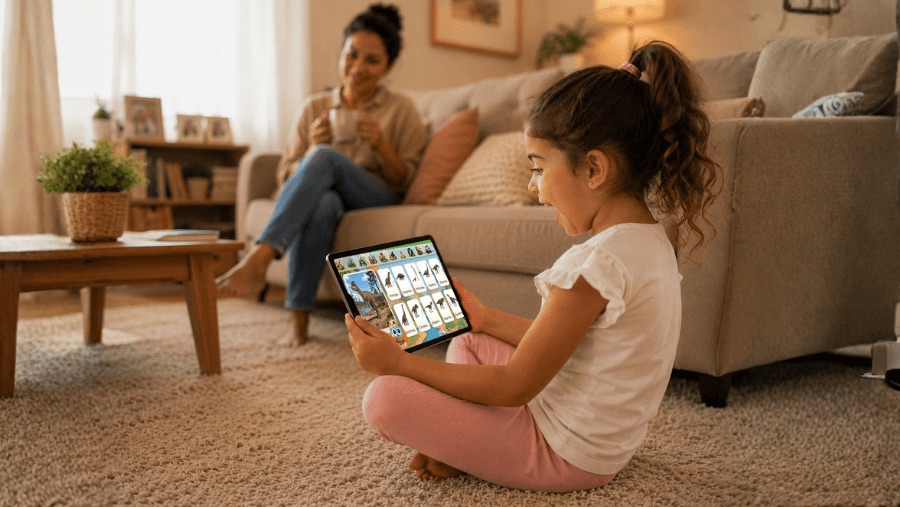
When the “Explore” step in the Boomerang Principle leads to a device, what’s on the other side matters. A safe exploration space for a preschooler has no ads, no user-generated content, and no open-ended chat window that wasn’t designed for young children. Wikids gives children a closed, curated world of narrated entries to explore instead of a conversational chat interface, so “Explore” always leads somewhere age-appropriate.
What If I Don’t Know the Answer?
Even better.
“I don’t know” doesn’t have to end the conversation. It can begin one.
“I don’t know. Let’s find out.”
That simple sentence shows children something valuable: not knowing isn’t a problem. It’s a reason to explore.
And sometimes you don’t even need to explore together. As children grow more independent, we can give them safe, age-appropriate ways to follow their own questions.
For children who can’t read yet, that’s exactly the challenge Wikids was created to solve.
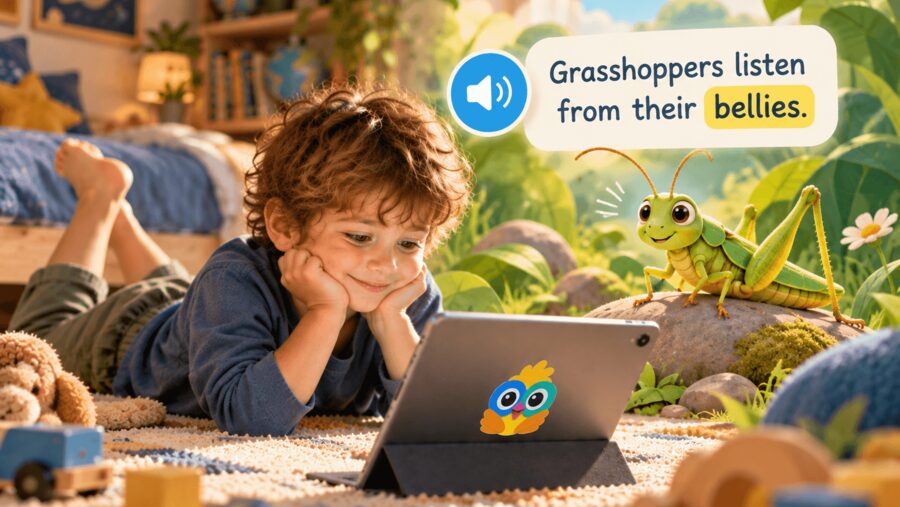
Wikids is a narrated, interactive encyclopedia for curious children ages 3-7, designed so pre-readers can explore the world independently and follow their own interests from one discovery to the next.
Because sometimes, the best thing we can give a child's question isn’t a faster answer. It's somewhere to go next.
FAQ
How can I encourage curiosity in my preschooler?
Give your child time to wonder, ask what they think before immediately answering, encourage them to form their own ideas, and create opportunities to explore questions together or independently.
Should parents answer every “why” question?
Children need reliable answers, but they don't always need them immediately. Sometimes returning the question with “What do you think?” gives the child an opportunity to think before receiving the answer.
What is the Boomerang Principle?
The Boomerang Principle is Wikids' simple three-step approach for turning everyday questions into opportunities for curiosity: Pause, Return, Explore. Pause before answering, return the question to the child, and then explore the answer together or independently.
What should I say when I don't know the answer?
Try saying, “I don't know. Let's find out.” It shows children that not knowing something isn't a failure, it can be the beginning of discovery.
Does Wikids work like a chatbot?
No. Wikids is a narrated, visual encyclopedia, not a conversational AI assistant. Children choose a topic and explore curated entries rather than typing or speaking open-ended questions to an AI.