Why Is Curiosity Important for Young Children in the Age of AI?

Curiosity is important for young children because it drives them to ask questions, explore, make connections, and discover things for themselves. These experiences support cognitive development and can strengthen children's motivation to keep learning. In the age of AI, when answers are available almost instantly, the journey of discovery becomes especially valuable.
Children are born curious. Long before they can read, they learn about the world by exploring it, touching, watching, listening, experimenting, and asking an endless stream of “why?” questions. A child sees a koala and wants to know where it lives. That leads to Australia, then to its deserts and wildlife, and suddenly to a completely new question: which animals can survive without much water? Nobody planned that learning journey. One discovery simply led to another. That's curiosity at work.
When children explore and figure something out for themselves, they can experience that wonderful little “Aha!” moment, the excitement of I found it! The value isn't only in the information they discovered, but also in the journey: wondering, trying, noticing, making connections, and sometimes getting things wrong before figuring them out. Research on guided discovery and playful learning supports giving children an active role in constructing knowledge rather than relying only on passive instruction. The joy of discovery can also make learning itself feel rewarding and encourage children to keep exploring.
But the world our children are growing up in is changing that journey. Information that once required searching and exploring can now appear instantly. AI can explain why the sky is blue, what happens inside a volcano, or how dinosaurs disappeared in seconds. That's an incredible opportunity. The goal isn't to keep children away from answers. It's to make sure they still have enough space to wonder before the answer arrives.
As AI becomes better at giving us information, one of the most valuable things we can nurture in our children may be the desire to seek it out in the first place.
Information is everywhere. Curiosity is not.
Our children don't just need answers. Their developing minds need opportunities to ask, explore, connect ideas, and experience the satisfaction of discovering something for themselves.
How can parents nurture curiosity?
It doesn't require turning every moment into a lesson. When your child asks “Why?”, sometimes try “What do you think?” before giving the answer. When something catches their attention, ask “Want to find out more?” Let dinosaurs lead to fossils, fossils to Earth, Earth to space, even when that's not where you expected the conversation to go. Our guide to developing curiosity with the Boomerang Principle walks through this step by step.
The point isn't how many facts they remember.
It's whether discovering one thing makes them want to discover another.
How does Wikids encourage curiosity?
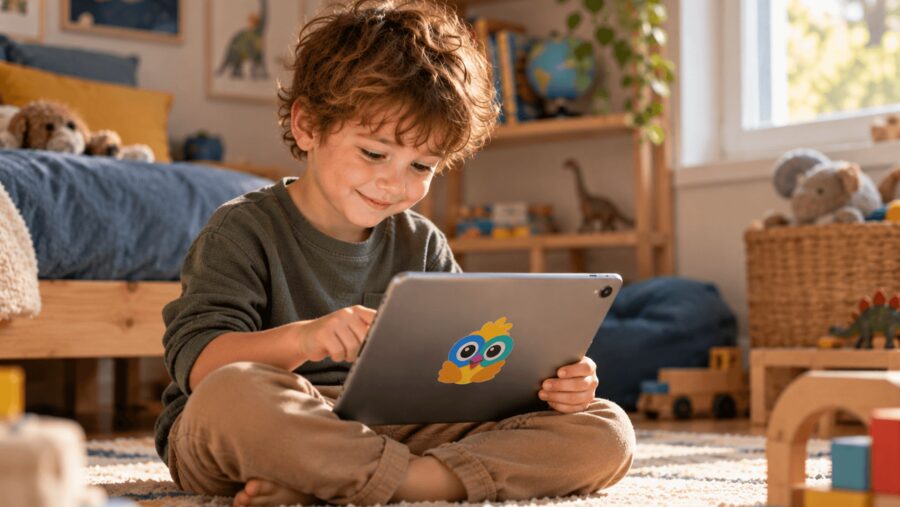
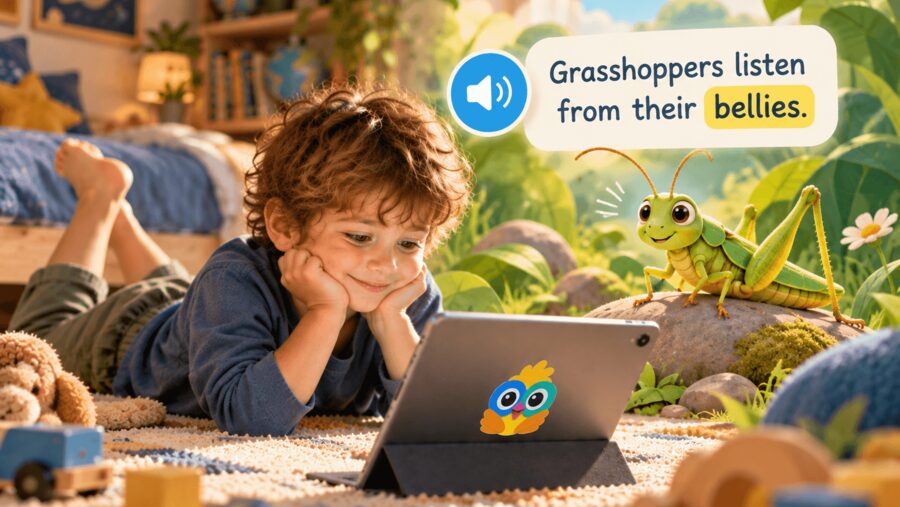
Wikids is a narrated, interactive encyclopedia created for curious pre-readers ages 3–7. It gives young children a way to independently explore topics that fascinate them, from animals and space to the human body, countries, nature and more, even before they can read.
Rather than turning every question into an instant answer, Wikids creates a world children can explore, allowing one discovery to lead naturally to the next.
Because the goal isn't to raise children who know everything. It's to raise children who never stop wanting to know more.
Chatbot or Encyclopedia? Choosing the Right Kind of AI for Young Children
Not all AI-powered tools are built the same way for young children. A general conversational AI assistant is designed to answer anything, which also means it can produce answers that are unpredictable, too complex, or simply not meant for a four-year-old. A narrated children's encyclopedia works differently: the content is curated in advance by a team that includes child psychologists and literacy experts, so what a child finds is always age-appropriate, even though the exploration itself feels open and independent.
FAQ
Why is curiosity important in early childhood?
Curiosity encourages young children to ask questions, explore their environment, experiment, make connections and actively engage with new information. These experiences are an important part of early learning and cognitive development.
How can parents encourage curiosity in preschoolers?
Give children time to wonder and explore before providing the answer. Ask open questions such as “What do you think?”, follow their interests, let them experiment, and give them opportunities to discover information independently.
Why might curiosity become more important in the age of AI?
AI makes information and answers increasingly easy to access. This makes children's motivation to ask questions, explore ideas, evaluate information and want to know more especially valuable.
Should parents answer all of their child's questions?
Children need answers, but parents don't always have to provide them immediately. Sometimes asking a question back, exploring together, or giving the child an opportunity to investigate can turn a simple answer into a richer learning experience.
Is it safe for a young child to talk directly to a general AI chatbot?
General AI assistants are not designed specifically for young children and can produce answers that are unpredictable or not age-appropriate. A curated, narrated encyclopedia built for preschoolers, like Wikids, is designed to keep exploration open but the content consistently age-appropriate.
What's the difference between a children's encyclopedia app and a general AI assistant?
A children's encyclopedia presents a fixed set of curated, expert-reviewed entries a child can explore independently. A general AI assistant generates open-ended answers to any question in real time, which is powerful but not built with a preschooler's needs in mind.